|
This article has been eagerly anticipated. Names have been altered to shield those implicated.
I recently attended a conference where the opening event was a press affair for Freddy Rolle, a former Grammy-winning producer, announcing his new signing, The Bank. The deal was orchestrated by the act's manager (let's call her Daffy), who invited press, professional athletes, the reunited singing group White Road, and, of course, Freddy Rolle himself. REFRAIN FROM IMBIBING THE KOOL-AID. The "Freddy Rolle Kool-Aid" refers to a mindset that infects the weak-minded, convinced that Freddy Rolle embodies the pinnacle of the music industry. They believe everything he says is gospel, and no one can compare to him. It's a belief that everything the act and management do must please Freddy Rolle, even if it means disregarding others. REFRAIN FROM IMBIBING THE KOOL-AID. Daffy sent me photos of the super producer and the act for publicity. However, the next day, she called angrily: "Who gave you permission to use those photos? White Road is furious and wants them taken down." That's when I realized she was under the influence of the "Freddy Rolle Kool-Aid." On the day of the event, Daffy arrived with her act, The Bank, for a sound check. Her first words were, "No one else can be on stage; this event is only for my act. We're having a 2-hour press party, and Freddy Rolle doesn't want to see anyone else." Astonishingly, she assumed the entire event would bend to her unspoken expectations. This mindset isn't new; those under the Kool-Aid's influence often feel superior and entitled to dictate terms. Fortunately, I've encountered Kool-Aid drinkers before and understand their thought process, or lack thereof. I calmly explained that we already had a planned schedule, with her act as the finale. The show would proceed as planned, but I ensured she had ample time to do as she pleased. We provided a large stage, professional sound and lighting, invited press and sponsors, had three camera crews for live streaming, and reserved five tables for her entourage. The only condition was that all sound had to cease by 11:00 PM due to city regulations, with a hefty fine for non-compliance. REFRAIN FROM IMBIBING THE KOOL-AID. Despite this, Daffy proceeded to complain because her act needed wireless microphones, even though it was only four hours before showtime, with no prior communication or rider. Her attitude was, to put it mildly, abysmal. I had to calm down the sound engineers, whom she had cursed out, while she loudly insulted everyone in earshot. Her daughter and granddaughter, also present, received a lesson in diva behavior before stardom. With the help of friends, I managed to procure five microphones for The Bank's sound check and performance. They left insisting the stage be cleared and ready for their 9:30 PM performance. Our show was a success, showcasing a variety of Black Music Month performances, from the 80-year-old Mr. Tommy Brown to Neo Soul, R&B, Gospel, and Hip Hop acts, culminating at 9:27 PM when the stage crew prepared for The Bank. REFRAIN FROM IMBIBING THE KOOL-AID. At 9:30 PM, Daffy's daughter arrived, and we asked about Freddy Rolle and The Bank. Her dismissive reply was that they would arrive when they felt like it and to stop bothering her. REFRAIN FROM IMBIBING THE KOOL-AID. At 9:45 PM, we began texting Daffy, stressing our time constraints and the need to conclude the show by 11:00 PM. She responded that they were just seven minutes away. This pattern repeated in ten-minute intervals until their arrival at 10:46 PM. REFRAIN FROM IMBIBING THE KOOL-AID. Their entrance was grandiose, complete with video vixens and their own television crew documenting their "esteemed" arrival. Instead of placing The Bank on stage immediately, Daffy's granddaughter performed a single song, followed by Daffy herself reading a lengthy bio of Freddy Rolle. REFRAIN FROM IMBIBING THE KOOL-AID. Finally, The Bank took the stage at 10:58 PM, but precisely at 11:00 PM, the venue management cut the power. They never completed their song, and naturally, it was all my fault: I didn't provide the right equipment, mistreated the act, and disrespected Freddy Rolle, who hadn't had a record deal in over a decade. Interestingly, despite not having recorded anything with Freddy Rolle, The Bank's current project flopped. They lack a major deal but act as if they do, accompanied by ego, disrespect, dishonesty, and an excessive indulgence in Kool-Aid, obscuring whatever talent they may possess. The landscape of business has undergone a profound transformation.
In recent conversations with my best friend, we've touched upon a topic that's gaining traction: the notion of demanding payment for sharing information, music, or films—an age-old strategy encapsulated in the phrase "The game is to be sold not told." Many argue that compensation should precede any sharing. However, I firmly believe this approach is outdated and could ultimately undermine your business. Most of us grew up with the belief that creating entertainment meant producing a product and then seeking out a major corporation to buy it, surrendering ownership of masters, publishing rights, copyrights, and artwork in exchange for an advance. These corporations would handle marketing, promotions (often at your expense), sales collection, and receive a cut from performances, merchandise, endorsements, and other related revenue streams. Essentially, a single entity would dictate how the public accessed and used your creations. Today, I'm here to declare that this traditional model has fundamentally shifted. The rapid exchange of information, audio, video, and business files among people globally, often without monetary transactions, has redefined how businesses operate. Direct access to consumers is giving rise to new business models, with governments and private industries swiftly adapting, while some sectors lag behind, clinging to practices from the 1980s. Consider Russia's initiative to digitize and make accessible their entire library collection online, encompassing literature from various languages like English, French, German, and more. Similarly, countries like Africa, India, and China are making significant strides in joining the global internet community, thereby democratizing access to vast reservoirs of knowledge and information worldwide. Previously, distributing products required engaging distributors who handled shipping, warehousing, and communication with businesses, often under contracts that allowed them to profit significantly from successful projects, should they be picked up by major labels. This was the accepted norm. Today, the largest distributor of audiovisual content is Facebook. In the past, creativity largely flourished through individual efforts across various fields like writing, music, dance, filmmaking, painting, and design. Collaborations were limited and personal style was paramount. Now, creativity thrives on a global exchange of ideas. What was once termed "sampling" or "biting" is now integral to global education. Much of my own inspiration and ideas stem from interactions online with diverse individuals from different countries, all sharing common threads of thought. We've become a society of "screen people," with millions engaging daily. Establishing an online presence with positive social media and search engine visibility has become indispensable for credibility and trust in today's market. Conversely, those with negative online reputations are quickly shunned. The concept of piracy has evolved into what I call "Motivation Meeting Opportunity." If I possess a copy of your work and there's a demand to access it, I can distribute it freely. While controversial, this kind of file sharing is commonplace, particularly among younger generations who view the internet as a limitless source of free information, music, and video. For years, copyright laws have troubled me, seeming antiquated and favoring those with money and influence. Major labels, publishers, and performing rights organizations have amassed billions while original creators often receive only a fraction of the profits generated through copyright enforcement. The internet is challenging these norms worldwide, necessitating new approaches and solutions. The emerging paradigm favors "User Licenses" over rigid copyright laws, emphasizing agreements between users and licensors for product usage rights. This approach is gaining traction, especially with End User Licensing Agreements (EULAs) becoming prevalent in the entertainment sector worldwide. Today's successful businesses prioritize open communication and the free flow of information. The outdated practice of withholding information until payment is received is obsolete in this new era. While some may cling to traditional notions, I embrace an open business approach, sharing knowledge, files, and business insights freely. In my experience, an open hand often receives more than a closed fist ever could. I'm not foregoing compensation, but I refuse to delay sharing valuable information and resources in anticipation of a future payday. 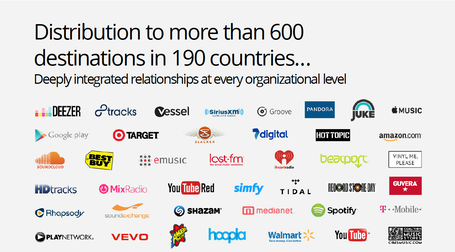 GLOBAL DISTRIBUTION Music streaming is a global market. On Top Records LLC / Virgin Music Group has an interconnected, multinational team of experts, all highly skilled in their local music industries. Collaborating to support releases wherever opportunity exists, they share their knowledge and leverage Virgin’s industry-leading solutions to grow artists in their home countries and expand into new territories. Headquartered in Miami with offices throughout North America, Latin America, Europe, Africa, Asia, and Australia, On Top Records LLC / Virgin Music Group works everywhere music is streamed.
PRESS RELEASE
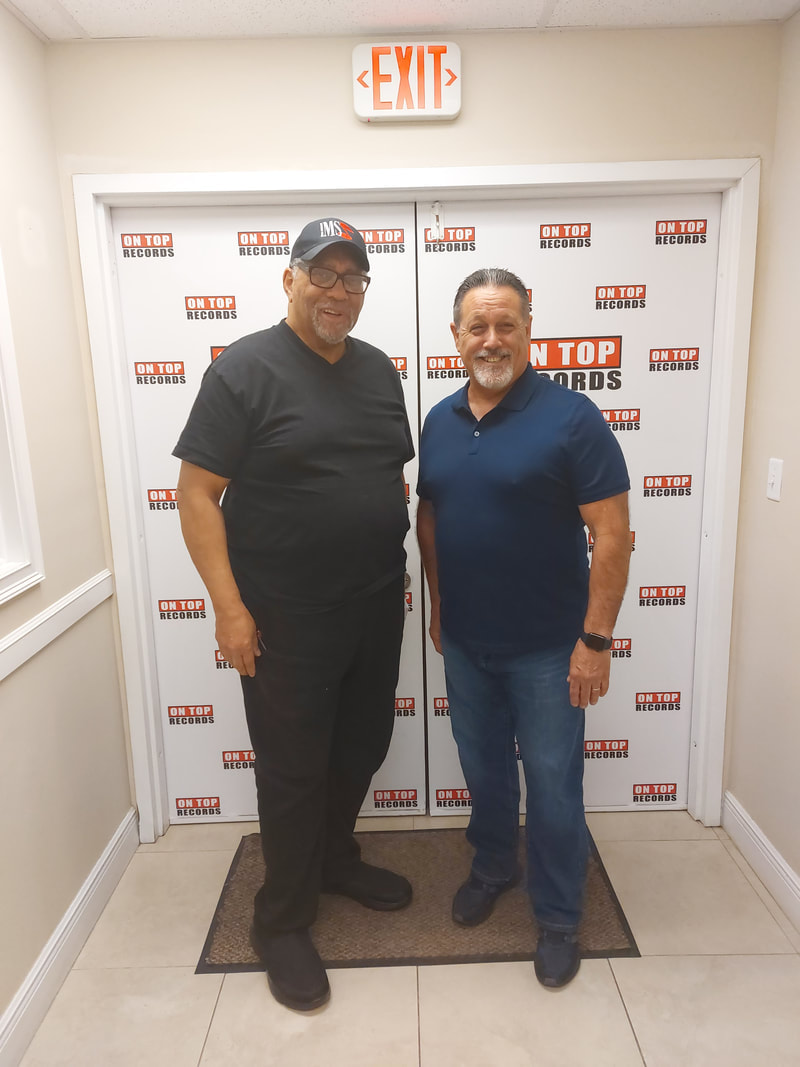
THE MUSIC SPECIALIST AND ON TOP RECORDS, LLC TEAM UP May 5, 2022 (Atlanta, GA) – ON TOP RECORDS, LLC has been around for many years, but a new, more formal collaboration between Allen Johnston (The Music Specialist) and Jose Armada Jr. (ON TOP RECORDS, LLC) promises to send the label to new heights. Johnston and Armada have worked together for over 20 years and have developed hundreds of positive revenue projects. Now the two are looking forward to even bigger and better things. Armada said, “Allen and I have the same goal. We want to assist those who need help distributing their music and music videos, with an emphasis on independent labels and artists. We have the tools and expertise to make that happen. Johnston reiterated the fact that their focus is on independent labels and artists, stating, “Music is a business. You can have the most talented artist or record label, and if they don’t know the business end of it – i.e., how to get their music and music videos distributed, played, and how to collect compensation for those, they will probably either fail or spend much more money than necessary. A lot of artists spend money on things that they don’t need to. We guide them through the entire process, even assisting them with their social media sites. To say that we help them with TIK TOK, Spotify, Facebook, and YouTube would be just scratching the surface.” ON TOP RECORDS, LLC works with all genres of music, but over the last 15 years, Latin music has dominated its roster. “We work with artists and labels from Mexico to Central and South America, Puerto Rico, Spain, the Santo Domingo, and other continents and countries. Music is universal, and so are our efforts,” said Armada. ON TOP RECORDS has been distributed by Ingrooves (which is owned by Universal) for 16 years. Contacts: Allen Johnston The Music Specialist (404) 734-5566 [email protected] www.asha.com Jose Armada Jr. On Top Records LLC (305) 635-5588 [email protected] |
Allen Johnston The Music SpecialistThe Music Specialist’s mission is to provide foundations in the Entertainment Industry and in business academics that will enable our clients to advance the field of social entrepreneurship with the highest quality performances that both educate and entertain. Archives
March 2024
Categories |


 RSS Feed
